
Blog
Is a Hyperbaric Chamber Filled with Pure Oxygen?
Learn how chamber air, supplied oxygen, oxygen concentration and ATA pressure relate to one another when reading hyperbaric chamber specifications.
Not necessarily. The gas used to pressurize a hyperbaric chamber and the way oxygen is delivered depend on the equipment design. In configurations that use air for pressurization and a separate oxygen supply, the air inside the chamber and the gas in the oxygen-delivery line are different parts of the system. The oxygen concentration at the equipment outlet should not be understood as the oxygen concentration of the entire chamber.
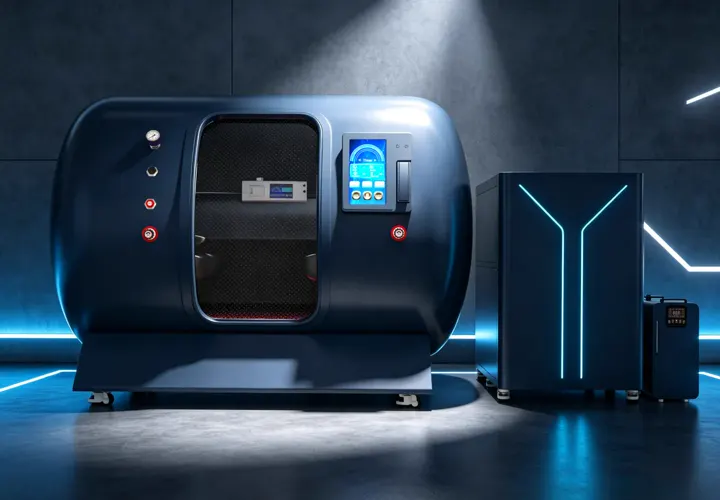
How Are Chamber Air and Supplied Oxygen Different?
In an air-pressurized configuration, the air-supply system sends air into the chamber, while the pressure-control system establishes and maintains the selected pressure. The oxygen-supply equipment uses a separate line to deliver oxygen-enriched gas to a nasal interface or a suitable mask.
These two systems perform different tasks. One manages chamber pressure and the surrounding air environment; the other delivers gas to the user. Understanding this difference makes it easier to read pressure, concentration and flow-rate specifications.
The View YF-1001 technical specifications lists air supply, oxygen concentration, nasal output and optional mask configurations separately.
What Does “93% ±3%” Mean?
When a specification sheet lists “93% ±3%” as the oxygen concentration, it describes the proportion of oxygen in the gas leaving the oxygen-supply equipment. It does not describe the composition of all the air inside the chamber.
When reading this value, also check the measurement point, specified flow rate and operating conditions. A parameter can only be interpreted correctly when its system and measurement location are clear.
The concentration at the equipment outlet is not automatically the same as the concentration actually inhaled by the user. The design of the nasal interface or mask, the supply method and possible mixing with surrounding air can affect the final inhaled gas. Outlet, chamber and inhalation-side concentrations should therefore be understood separately. This type of variation is discussed in the British Thoracic Society oxygen-use guideline.
Does 2.0 ATA Turn Air into Pure Oxygen?
No. ATA describes absolute pressure, while oxygen concentration describes the proportion of oxygen in a gas. They are different properties.
If the gas composition remains unchanged, increasing the total pressure does not turn a gas mixture into pure oxygen. A setting of 2.0 ATA describes the pressure level; it does not determine oxygen purity.
Under Dalton’s law of partial pressures, the partial pressure of one gas component depends on the total pressure and the proportion of that component. This explains why pressure and oxygen concentration should be reviewed together, but cannot replace one another. See the OpenStax explanation of gas mixtures and partial pressure.
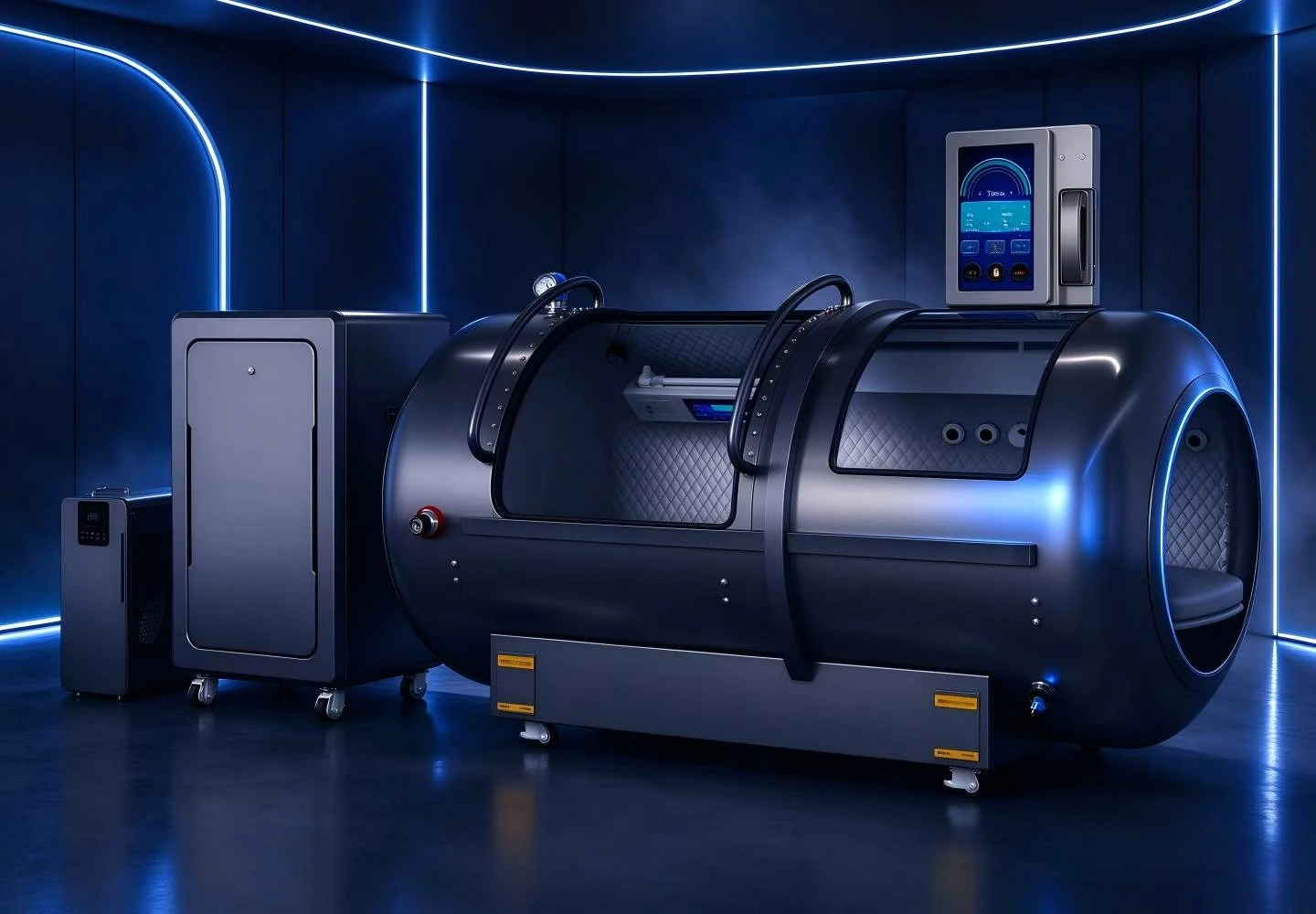
What Role Does Ventilation Play?
After the chamber is pressurized, air exchange still takes place according to the equipment design. The ventilation system renews chamber air through intake and exhaust, while the pressure-control system coordinates the airflow to maintain the selected pressure.
A pressurized chamber is therefore not necessarily a space where air exchange stops completely during operation. The actual gas composition can be affected by air intake, exhaust and the oxygen-delivery arrangement. The relevant measurement point should be checked when exact information is required.
What Should You Ask When Comparing Products?
When reviewing hyperbaric chamber information, start with these questions:
- What gas is used to pressurize the chamber?
- Does the stated oxygen concentration refer to the equipment outlet, the chamber or the inhalation side?
- Is oxygen delivered through a nasal interface, a mask or another design?
- What configuration and operating conditions does the flow-rate value describe?
When comparing products, review the pressurization gas, oxygen-delivery path, concentration measurement point and flow-rate conditions together. This provides a more accurate understanding than looking at one percentage alone.
Planning an oxygen chamber project?
Share your space, capacity and configuration requirements with our team.